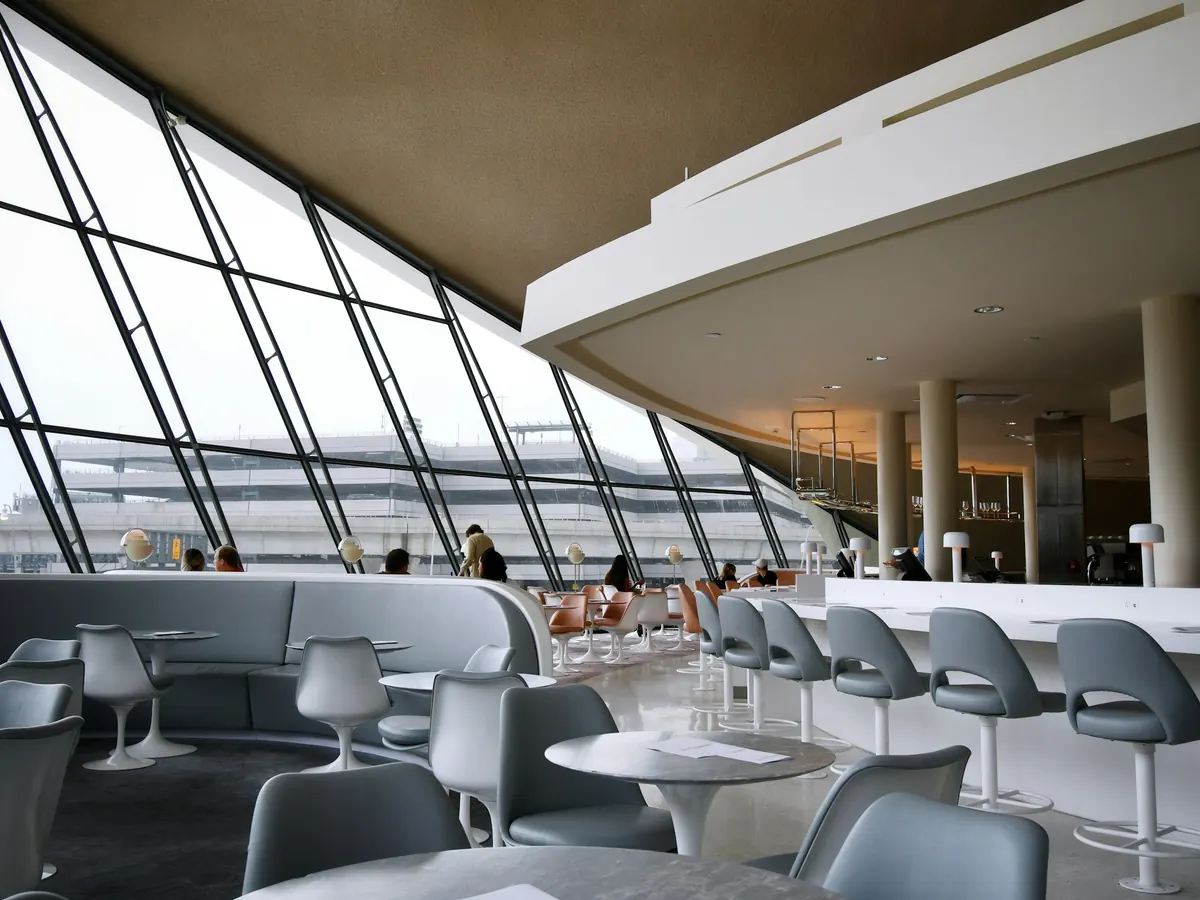
Semi-private flying sits between the airline and a private jet. You buy a seat rather than an aircraft, but you board at a private terminal or a separate area, avoid the main airport crowds and fly on a smaller aircraft with far fewer passengers. For the right trip it is a genuinely useful option. For the wrong one it is a compromise that costs more than it saves. This guide explains how it works, who flies it and how it compares with a full charter.
The basic idea
A semi-private service runs flights on set routes, usually between busy city pairs a few hours apart or less. Instead of chartering the whole aircraft, you buy individual seats, much as you would with an airline. The difference is the setting: smaller aircraft, often with roomier seating, departures from private terminals or dedicated lounges, and check-in measured in minutes rather than hours.
Most services publish their schedules well ahead, and popular departures on Friday afternoons and Sunday evenings tend to fill first.
Because the cost of each flight is shared among everyone on board, a seat costs a fraction of a whole charter. Because the aircraft flies to a timetable and carries other travellers, you give up the control that makes charter valuable: your own departure time, your choice of airport, and a cabin that belongs to your group alone.
Who flies the aircraft
In the United States, semi-private flights are flown by FAA-certificated carriers. Many services sell seats as public charters under Department of Transportation rules (14 CFR Part 380), where a charter operator markets the flights and a certificated air carrier operates them; others run scheduled service under their own certificate. Either way, the booking terms should tell you who sells the seat and who flies the aircraft, and they are worth reading before you pay.
Private charter works differently. You, or your broker, arrange the whole aircraft with an operator certificated under FAA Part 135, which holds operational control of your flight and answers for maintenance, crew training and crew rest.
Semi-private, charter and airline side by side
| Semi-private | Private charter | Airline | |
|---|---|---|---|
| You buy | A seat | The aircraft | A seat |
| Departure time | Set by the operator | Set by you | Set by the airline |
| Terminal | Private terminal or separate area | Private terminal (FBO) | Main terminal |
| Cabin | Shared with other travellers | Your group only | Shared, often full |
| Airports | A limited network | Almost any suitable airport | Commercial airports |
| Luggage | Per-seat allowance | What fits the hold | Airline allowance |
What the experience is like
On a typical semi-private trip you arrive at the private terminal a short while before departure, check in, go through whatever screening the service uses and walk out to the aircraft. Cabins range from turboprops with a handful of seats to regional jets with a few dozen, usually set up with more space per passenger than an airline cabin. Flights tend to be short, often under two hours, and arrival is just as quick: no long walk to the gate, no wait at a carousel.
Many services also keep lounges at their private terminals, with seating, refreshments and Wi-Fi, so the short wait before boarding is a comfortable one.
The trade-offs show up at the edges. If your meeting runs late, the flight leaves without you. If the service does not serve your local airport, you drive to one it does. If you bring a large dog or a set of golf clubs, the rules may not allow it, or may require advance notice and a fee.
When semi-private makes sense
- You are one or two travellers on a route the service flies often.
- Your timing is flexible enough to fit a schedule.
- You travel light, with no large pets.
- You want to avoid the main terminal without paying for a whole aircraft.
When a charter is the better call
- Your group is four or more, and the cost per person of a whole aircraft falls toward the price of several seats.
- You need to leave at a particular time, or connect tightly with something else.
- Your destination is a small airport, an island or a mountain town that shared services do not reach.
- You are carrying skis, golf bags, a larger dog or luggage for a long stay.
The cost question
It is tempting to set a semi-private fare against a charter quote directly. A fairer comparison counts everything: the number of seats you would buy, the drive to the airport each option uses, the bags you would pay extra to bring and the value of your own timing. A light jet at $3,500–5,500 an hour on a one-hour trip, shared by five people, can come closer to the cost of five seats than many people expect, before repositioning and taxes are added. For one or two people, the seat usually wins on price.
Charter has costs that a seat does not show. If the aircraft is based away from your departure airport, repositioning is part of the price, and a round trip with days in between can include daily minimums or crew expenses. All of these appear in an all-in quote, which is why it is the right number to compare with the total cost of seats.
Questions to ask before you buy a seat
- Who operates the aircraft, and under which certificate?
- What is the baggage allowance, and how are oversize items handled?
- What happens if the flight is delayed or cancelled?
- Can the date be changed, and at what cost?
- Which terminal is used at each end, and how early should I arrive?
A well-run service answers all of these clearly in its terms. If the answers are vague, treat that as useful information too.
How we fit in
We arrange private charter. We do not sell semi-private seats, and we do not recommend particular services. What we can do is look at your trip honestly: if a whole aircraft is the better fit, we quote it all-in with the operator named, and if a shared seat looks smarter, your advisor will say so. Our six-question quiz is a quick way to see which way your trip leans.
Seat or whole jet?
Send the trip and get an all-in charter quote, or an honest steer toward a seat.